On July 1, 2025, New Mexico became the 12th state to pass an Idaho Stop Law, also known as a stop-as-yield law or rolling stop law for bicycles. Under Senate Bill 73 (SB 73), cyclists are now legally allowed to treat stop signs as yield signs and red lights as stop signs, meaning they can roll through intersections when safe, without making a complete stop, so long as they yield to other traffic and pedestrians.
This article explains how the law works, why it was adopted, how it compares to similar laws in other states, and what cyclists and drivers need to know about compliance, safety, and enforcement.
What Is the Idaho Stop Law for Bicycles?

The Idaho Stop Law allows cyclists to treat stop signs as yield signs, slowing down, checking for traffic, and proceeding through the intersection without coming to a complete stop when it’s safe to do so. This is the base version of the law, included in every state that adopts the Idaho Stop.
Some states also include a red light provision, allowing cyclists to stop at a red light and proceed when the intersection is clear, rather than waiting for the light to turn green. This variation helps address situations where traffic signals don’t detect bicycles, a common problem at many intersections.
The Idaho Stop, also known as a stop-as-yield law, rolling stop, or safety stop, was first passed in Idaho in 1982 and has since been adopted in more than a dozen states. New Mexico joined them in 2025, passing Senate Bill 73, which includes both the stop sign and red light provisions.
To learn more about the Idaho Stop as Yield Law, including the history and arguments for and against, read Do Cyclists Have to Stop at Stop Signs?
Key Details of New Mexico’s Idaho Stop Law
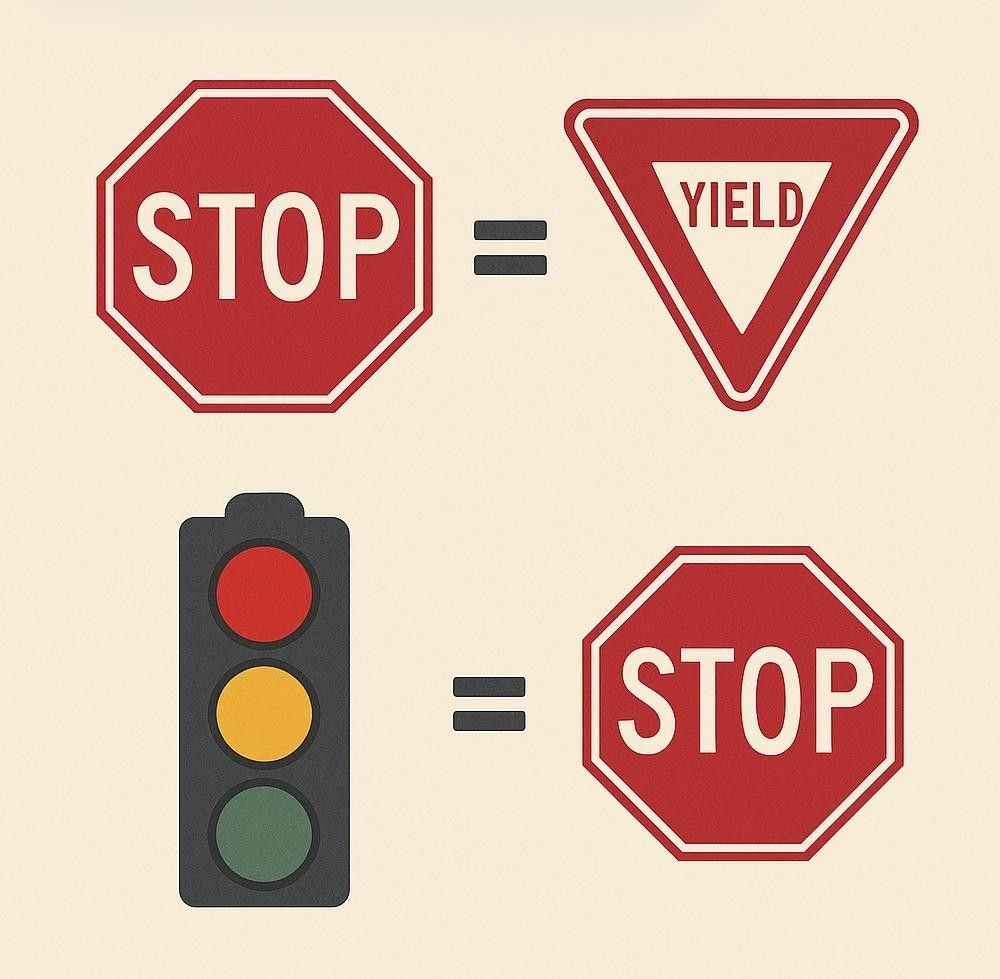
New Mexico Senate Bill 73, signed into law in 2024 and effective July 1, 2025, officially brings the Idaho Rolling Stop Law to New Mexico. The law applies statewide and gives cyclists two key rights at intersections:
- At stop signs: Cyclists may treat them as yield signs—they can slow down, assess for traffic, and proceed without fully stopping if the intersection is clear.
- At red lights: Cyclists must come to a complete stop first, then may proceed when it’s safe to do so.
The law still requires cyclists to:
- Yield to pedestrians and vehicles with the right of way.
- Use hand signals when turning.
- Ride predictably and obey general traffic laws.
This change applies to all bicycles, including Class 1, 2, and 3 electric bicycles. Riders must still use caution and follow all right-of-way rules to ensure safety at intersections.
In short, SB 73 gives cyclists more control at intersections while maintaining their responsibility to yield and ride safely. It also helps keep traffic moving.
For more on New Mexico’s bike rules, see New Mexico Bicycle Laws: Everything Cyclists Need to Know.
Why Did New Mexico Pass the Idaho Stop Law?
New Mexico’s adoption of the Idaho Stop Law was driven by a combination of safety data, advocacy, and the growing national trend toward modernizing bicycle laws.
The law gained momentum after the tragic death of Charles Malagodi, a well-known Albuquerque cyclist and safety advocate. His passing became a catalyst for legislative action, highlighting the need to improve intersection safety for people on bikes.
Supporters pointed to compelling data:
- In Idaho, cyclist injuries dropped by 14.5% the year after the law was enacted.
- In Delaware, stop-sign intersection crashes involving cyclists fell by 23% within 30 months of implementation.
- According to the New Mexico Department of Transportation, 60% of bicycle crashes in the state occur near intersections.
These findings showed that allowing cyclists to yield rather than stop unnecessarily can reduce time spent in intersections, limit conflicts with turning vehicles, and lower crash risk.
By passing Senate Bill 73, New Mexico joined a growing list of states adopting evidence-based laws that better reflect how cyclists operate on the road.
Legal Rights and Responsibilities for Drivers and Cyclists
New Mexico’s Idaho Stop Law changes how intersections work for cyclists, but all road users still share responsibility for safety. Here’s what cyclists and drivers need to know to stay compliant with Senate Bill 73:
For Cyclists
DO:
- Slow down at stop signs and yield to any cross traffic or pedestrians. This means you need to stop and wait for pedestrians and traffic to clear the intersection.
- At red lights, come to a complete stop, then proceed when clear.
- Use hand signals to indicate turns or lane changes.
- Ride predictably and visibly so others can anticipate your movements.
DON’T:
- Don’t blow through intersections assuming others must yield to you.
- Don’t assume drivers understand the new law.
- Don’t ignore pedestrians or right-of-way rules.
- Don’t treat red lights as yield signs—a full stop is still required at red lights before proceeding.
For Drivers
DO:
- Expect that cyclists may not stop completely at stop signs—this is legal under SB 73.
- Maintain the right-of-way cautiously near bicycles.
- Be alert for cyclists proceeding after stopping at red lights.
- Give space and time for cyclists to make safe decisions at intersections.
DON’T:
- Don’t assume cyclists are breaking the law by rolling through a stop sign.
- Don’t cut off or rush cyclists at intersections.
- Don’t ignore your own obligation to yield to cyclists and pedestrians for safety.
This law reduces confusion for cyclists at intersections, but it requires awareness and cooperation from both cyclists and drivers to work as intended.
States with Similar Idaho Stop as Yield Laws (2025)
As of 2025, 12 U.S. states plus Washington, D.C., have adopted some version of the law that lets cyclists treat stop signs as yield signs and/or red lights as stop signs.
| State | Stop‑as‑Yield (Stop Signs) | Red‑Light‑as‑Stop Sign(Red Lights) | Year Adopted |
|---|---|---|---|
| Idaho | Yes | Yes | 1982 |
| Delaware | Yes | No | 2017 |
| Arkansas | Yes | Yes | 2019 |
| Oregon | Yes | No | 2019 |
| Oregon | Yes | No | 2019 |
| Washington | Yes | No | 2020 |
| Utah | Yes | No | 2021 |
| North Dakota | Yes | No | 2021 |
| Oklahoma | Yes | Yes | 2021 |
| Colorado | Yes | Yes | 2022 |
| Washington, D.C. | Yes | No (or limited) | 2022 |
| Minnesota | Yes | No | 2023 |
| Alaska | Yes | Yes | 2023 |
| New Mexico | Yes | Yes | 2025 |
Note: The “Red‑Light‑as‑Stop” column indicates whether cyclists may legally treat a red light like a stop sign (stop first, then go when safe).
The “Stop‑as‑Yield” column covers the base rule allowing cyclists to treat stop signs as yield signs.
E-Bike and Scooter Applicability
New Mexico’s Idaho Stop Law applies to all bicycles, including electric bicycles. But the rules vary for other types of EVs, such as electric scooters.
E-Bike Coverage:
- Class 1 e-bikes (pedal-assist, up to 20 mph): ✅ Idaho Stop applies
- Class 2 e-bikes (throttle-assist, up to 20 mph): ✅ Idaho Stop applies
- Class 3 e-bikes (pedal-assist, up to 28 mph): ✅ Idaho Stop applies
Electric Scooters: The law specifically covers “bicycles” under New Mexico statute. Electric scooters may be subject to local ordinances that vary by municipality. Check with your city or county for specific rules.
Riding an e-bike? Also read our guide: New Mexico Electric Bike Laws and Legislation 2025 to know the classes, age limits, where you can ride, and equipment rules.
Conclusion: A Smarter Law for Safer Streets
New Mexico’s adoption of the Idaho Stop Law marks a meaningful shift toward modern, cyclist-aware traffic policy. By allowing cyclists to yield at stop signs and proceed safely through red lights after stopping, the law improves traffic flow and reduces the time riders spend in high-risk intersections.
With Senate Bill 73, New Mexico joins a growing number of states recognizing that traditional stop requirements don’t always make sense for people on bikes. But the law doesn’t remove responsibility—it reinforces the need for cyclists to yield, ride predictably, and prioritize safety at all times.
Even with improved laws like New Mexico’s Idaho Stop, cycling accidents still occur. When they do, having an experienced New Mexico bicycle accident attorney makes all the difference in protecting your rights and securing fair compensation.
Ride Protected. Ride Safe, with Bike Legal

At Bike Legal, we don’t just practice law —we ride, too. We understand the risks cyclists face and the laws that protect them.
We advocate for safer street design, better bike infrastructure, and data-driven laws like New Mexico’s Idaho Stop as Yield Law.
Even with modernized laws, collisions occur. You need counsel that understands both the law and the legal nuances of bicycle cases.
What you can expect from Bike Legal
- Attorneys who know what it takes to win
- Early, thorough investigation with expert analysis
- Focus on full recovery: medical care (now and future), lost income/use, property damage, and pain & suffering
- A top-rated legal team that specializes in bicycle crash claims.
📞 Call 877-BIKE LEGAL (877-245-3534) for a free consultation with an experienced bicycle accident attorney.